The New Year, 2017

The beginning of every new year is filled with tremendous festivity,  warmth, and good  wishes.   It is normal to hear the average person wishing almost everyone they come into contact with, a happy new year. People wish their family members, relatives, friends, neighbours, co-workers and even strangers happiness and prosperity. Countless people throughout the globe wish themselves, their countrymen and women and people in other countries, peace, harmony, and a brighter and better future. They desire the world to be free from wars, sufferings, exploitation, corruption, marginalization, manmade darkness and ignorance.

This year 2017 is not different in that sense from all the other new years before. With all the good wishes and all the good will, our world, apart from little progress here and there, continues to progressively slide into further and deeper manmade darkness and sufferings.

The outstanding scholar and scientist, Albert Einstein, opined that the wrongs in our world continue unabated not necessarily because of the people who commit them, but most importantly because of the silent majority who do nothing meaningful to prevent them from reoccurring.

Warm and good wishes are important parts of positive psychology but they do not, just like that, make things happen.  Our world does not work according to mystical or magical ways as is believed in by religious people, including most Muslims. Our environment works according to the laws of nature and does not cater to religious rituals, prayers, sacrifices, and beliefs. Rain, sunshine, moonlight, heat, and cold, etc. are not influenced by the religious beliefs, rituals, and invocations of religious priests and followers.

The Qur’aan in Surah 53 Aayaat 39-41 teaches us some of the fundamentals to human success:

Human beings will not achieve anything purposeful by mere wishful thinking. Hard work and due diligence are the prerequisites to results and outcomes.

The appropriate steps based on the right guidelines coupled with hard work will always stand out in the life of the one who honestly pursues his or her dreams.

All things being normal, hard work and due diligence will produce the most becoming results.

Sense and substance translated by Mohamed Saffie

The Qur’aan further tells us in Surah 2 Aayah 202:

Those people who work hard and employ due diligence will earn what they worked for, irrespective of the nature of their goals.

Sense and substance translated by Mohamed Saffie

We now understand that magic and mystery are mental illusions.  Resurrecting and empowering inspiration, resolute aspiration, and endless perspiration is the must for growth and development. Even the popular religious understanding that people can literally call upon Allaah with empty words and have their wishes, needs and wants fulfilled, is not established in the Qur’aan.  The practical sense of the message in the Qur’aan, for ages now, has been conveniently given a religious interpretation. No wonder, the supplications continue unabated with insignificant or no results.

The Qur’aan further tells us in Surah 13 Aayah 11:

——Undoubtedly, Allaah does not and will not alter the situations and conditions of any people until they, first and foremost, alter what is within their power to change for their benefit, that of their fellow human beings. Additionally, they must change their outlook of the things they consider very precious.

Sense and substance translated by Mohamed Saffie

Thus, as we embark on the year 2017, let us be good to ourselves, our family members, our friends, our neighbours and all our dear fellow human beings, by continuing to extend warm and good wishes to them but simultaneously initiate, participate and support projects that will make our good wishes and warm greetings a reality. This will certainly have an immediate and long-lasting positive effect on ourselves, our family members and all others of humanity.

Let us all believe in the good and great powers that are latent in each individual.

The Qur’aan teaches us in Surah 5 Aayah 32:

—-Whoever renews and rejuvenates his or her life and then the life of another person, it is as if he or she has given life to the entire humanity.

Sense and substance translated by Mohamed Saffie

The website is our hand of good will and warmth to you and all humanity.  Let us evaluate it objectively for all the meaningfulness and goodness it offers.

May we all start with ourselves and make 2017 a blessed year for everyone.

What are you celebrating? (Eid-ul-Fitr)


It is a well known fact that “Muslims” around the world celebrate the day after “Ramadaan” in great style. That day of celebration is known as Eid-ul-Fitr. At its core, “Eid” literally means recurring.  “Fitr” means eating and drinking; breaking the fast of the month of Ramadaan. Thus, Eid-ul-Fitr is the festival that marks the breaking of the fast at the end of Ramadaan.


Muslims treat it as a very special day.  They feel that it is an occasion for rejoicing. After all, they have just completed one month of fasting. On the festival of Eid-ul-Fitr, they perform special prayers, give charity, consume palatable dishes, wear new and beautiful clothes, visit and invite family and friends, exchange Eid greetings and gifts, chant and sing religious passages, play games, have fun and express their great joy to mark the end of the prescribed month of fasting. The atmosphere echoes with joy and celebration.


However, what is it that Muslims truly celebrate on the day after Ramadaan? What have they achieved? What poverty have they conquered, and what disciplines have they adopted? Have they meaningfully felt for the poor, homeless, marginalised, and displaced? They claim Ramadaan helps them to nurture their feelings for the poor and the ones who normally go hungry as a way of life.  In reality, however, the poor fast for most of their life.


Further, have they arrived at a true plan to tackle poverty and the real reasons that bring about imposed and manufactured poverty? Are they prepared to become advocates and activists against poverty in their communities, societies, and governments? Do they exit Ramadaan rejoicing with a master plan to stand up for and alongside with the oppressed and the marginalised? Are they willing to reconsider the status of the poor by now considering them as equals in their humanity?


Those that employ the poor workers in the farms, factories, homes and in other projects and underpay them – are they now prepared to pay them wages that would enhance their welfare and well-being? Are those who resort to corruption and bribes, which are rampant in numerous Muslim communities – are they now prepared to abandon those practices and turn to cultivating values and standards that are pure, clean, and free from such corrupt practices. Are those business men and women who resort to deception in trade and commerce, as well as hiking the prices even of staple commodities – are they prepared to discontinue such practices with the end of Ramadaan? Are those that are in administrative positions as well as those delegated on behalf of people to administer their affairs – are they prepared to be fair, just, honest, and restore the dignity, humanity, rights and confiscated properties, and return them to their rightful owners? Will the prejudice and the hatred meted out to people of different religious and socioeconomic groups be discontinued?


Unfortunately, the above questions never cross the minds of Muslims who have finished the month of fasting. A simple neat check mark is carefully placed in their minds beside “Fast the prescribed month of Ramadaan” – check. Now it’s party time!


What the Qur’aan says about celebration, festivity and rejoicing

Most fundamentally, is there any reference in the Qur’aan to the things Muslims celebrate?  Does the Qur’aan advocate the festival, Eid-ul-Fitr?


Indeed, the Qur’aan is one of the Books of Allaah.  It consists of a collection of the highest values, principles, and standards for escaping manmade darkness and for ushering in the light and enlightenment of Allaah’s Guidance. It is not a new revelation (Surah 42 Aayah 13).  It confirms the revelations that existed before (Surah 10 Aayah 37).  It enunciates and supports only that which is most meaningful and beneficial for the human race by allowing them to rise out of the stagnation present in society (Surah 17 Aayah 9).


Here are multiple references directly from the Qur’aan about the topic of celebration. Compare the sense and substance of the following Aayaah with what Muslims celebrate on Eid-ul-Fitr.


What people in general celebrate: 

Surah 13, Aayah 26 (Translated by Mohamed Saffie):

Allaah’s laws which govern human life, spread out countless opportunities of all that is essential for comprehensive development for anyone who desires, wills, and acquires the capability towards that end. People who disregard Allaah’s Books, reject the dynamism of Al Aakhirat, and only rejoice and celebrate over matters that are of a transient nature and thus short lived.  Such a pursuit of transient and short lived objectives viz a viz the dynamism of Al Aakhirat, is nothing more than emotional and physical pleasures. This is so because Al Aakhirat is all about the immediate and distant future underlined with sustainability, regeneration, continuity, living on, betterment, enhancement, future empowerment and a better tomorrow.


Those who follow Allaah’s Guidance, celebrate their material acquisitions as means to  higher values, principles and standards of life: 

Surah 27, Aayah 36 (Translated by Mohamed Saffie):

When the envoys of Queen Sheba came to Sulaimaan (one who humbled himself, willingly submitted, and became a vehicle for Allaah’s guidance to people), he was amazed at the material richness they brought him, and he exclaimed, “Is it that you seek to extend and increase my material possessions with these popular forms of wealth? Rather, I prefer the values and principles of Allaah’s Books. They allow me better choices and enrich me much more than what you have presented. You are the ones who celebrate and rejoice at these forms of wealth.”


Those who are eager to escape human darkness are very happy for the Guidance revealed to His messenger:

Surah 13, Aayah 36 (Translated by Mohamed Saffie):

Those who received Allaah’s Book of sublime values and upright principles and attach great value to its revelation, rejoice and celebrate whatever it has been revealed and unfolded unto you. However, there are groups and sections of people who are not happy with its values and principles. They dislike parts of it. Express to such who dislike it: “I was enlightened and commanded to only obey the highest values and principles of life, and forbidden from forming partnerships and associations which share conflicting ideologies and contaminate the values and principles aimed at the highest standards of human well-being and welfare. I motivate myself with Allaah’s Book, aspire to its values, and invite everyone to consider and pursue such a path. It and it alone is my focus, destiny and goal.”


Some people rejoice at the setbacks of others:

Surah 3, Aayah 120 (Translated by Mohamed Saffie):

Those people who reject the fundamentals of Allaah’s Guidance and play double roles with you, conceal their evil intentions whenever they meet you. They are displeased whenever any good, benefit, or positive empowerment happens to you.

This is so because they are jealous of you and harbour ill will for you. This is their true nature:  if any setbacks befall you, they gloat in happiness at your failure, but if you remain steadfast and stay resolutely on the course of His Guidance, while taking every precaution and care to avoid harm and loss, their evil designs will not hurt you significantly in the long run. Everything that you do is within the boundaries of Allaah’s laws.


Some people rejoice at their opposition to the messenger, celebrate in backwardness, and discourage those who strive in HIS path.

Surah 9, Aayah 81 (Translated by Mohamed Saffie):

Those who compete against the message with their well known opposition to it, dislike to strive in its cause with their persons and resources. However, they have no difficulties in finding time, energies, and resources to have celebrations and festivities in such a state. They even discourage others from support it by highlighting the difficulties and hardships that would be in their path. Well, declare unequivocally to them the following: The hardships and difficulties that already exist in the numerous hell-like situations of many societies, are worse than the hardships and sacrifices that it will take, to sincerely and collectively build a united, harmonious, and universal system for the welfare and wellbeing of all.


If those who abandon the message and oppose it, were to comprehend its core teachings and objectives, they would realise that the human family has the capability to solve its problems. This would be possible only if humanity reverts to the standard universal values of mutual respect, love, care, protection and support for one another.


Neither brag nor use your wealth to oppress people:

Surah 28, Aayah 76 (Translated by Mohamed Saffie):

The wealthy class at the time of Musaa [the one who was sharp in his resolve, mind and action against the oppression of his society and who was considered a threat by them] were unjust to their people. We enriched them with different kinds of wealth that would require countless powerful people to reach such heights. The oppressed people were certain that Allaah’s laws do not favour those who brag about their wealth.


Some people fail to recognise that their setbacks in life result from the seeds they sow:

Surah 30, Aayah 36 (Translated by Mohamed Saffie):

Some people are immature, impractical, and unrealistic about the results in their lives. Whenever Our laws empower them to experience compassion, warmth, happiness, comforts, mercy, and countless other attributes to rectify one’s life, they become happy and resort to celebrations and festivities, failing to use these vehicles for better and higher values of life. However, when setbacks and calamities meet them as a result of their choices and actions, they become desperate and distressed. They ultimately lose faith and direction.


Those whose primary pursuits are materialistic possession, comforts, power and control:

Surah 40, Aayah 83 (Translated by Mohamed Saffie):

When our messengers came to humanity with the reasons for human darkness as well as with the clear values, standards, and principles of His Guidance, which must be cultivated, those people, whose primary focus has been material possession, comforts, strengths, power, prestige and control – arrogantly turned away and boasted about their possessions, skills, and knowledge they have; their focus has been materialism and a religion which promises them that after their death they would be saved from the hell fire and enter into the garden of bliss.  Notably, nothing concrete is said about the prevailing darkness except that it is a predestined prison for people with faith and a paradise for those who reject faith. With time, they are surrounded with their materialistic possessions and their powerless religions. This is the result for making mockery of His Guidance.


Those who argue with the gems of Our Guidelines and consider the values, principles, and standards of Allaah’s Guidance to be false:

Surah 40, Aayah 75 (Translated by Mohamed Saffie):

There you are, a people who rejected the principles and standards of Allaah’s Book and consider it forged and false because of prejudice and popular trends. This attitude breathes a sheepish mentality and personality  and eventually leads one to the popular social festivities and celebrations without any substantial, meaningful and prolong benefits to self, family and community. These activities are not underlined by Al Haqq– the truth and the essence of life.

They preoccupy your mind with mundane festivities and prevent you from reflecting on the most important issues of life.

Overall, you have become a being whose life is not build on validated directives,

A person who does not seek to achieve harmony and happiness by merit,

Failing to uphold and rise up for the rights and entitlements of the planet and those who reside in it, irrespective of being your family or not.

You pride yourselves and bloat about matters outside the realm of the Guidance.

What are you sacrificing?

untitled

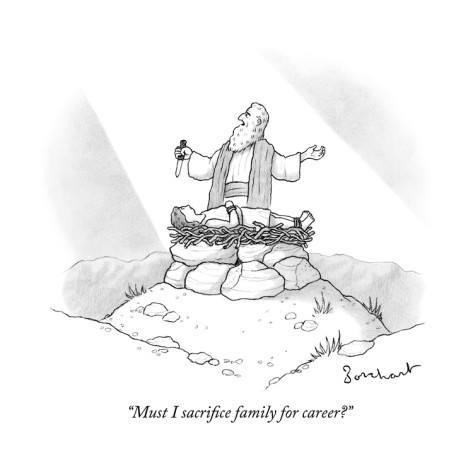
Every year, billions of humans celebrate a day, Eid ul Adha, to commemorate and celebrate the story of Abraham (Ibrahim) and his son, Ishmael (Ismaeel). However, I would like to address my concerns with this tale, or fallacy:

The common story goes that God asked Abraham to “sacrifice” his son. I respectfully submit that this would mean that God asked Abraham to “kill” his son. Isn’t sacrifice a fancy word for first degree murder? Let’s call a spade a spade: sacrifice = murder. How absurd that the most sublime God would encourage or instigate murder!

Chapter 10, verse 44 (Translated by Mohamed Saffie):

For certainty, neither does Allaah do harm, wrong nor injustice to any person, nor does HE enjoin them to harm, wrong or to be unjust to any. But it is people themselves who harm, wrong, and are unjust to themselves and others.

What was this potential murder for? What wrong did Abraham’s son do to deserve almost death? Traditionally, for some tribes in Arabia, if a female child was born, her father would bury her (alive). This horrific crime is tragic because the child did nothing wrong to deserve death, and further, which child deserves death anyways? Why did Abraham’s son deserve death? Is it okay to kill a minor for no reason according to the Qur’aan? Absolutely not.

Nowhere in the Qur’aan is this tale of sacrificing Ismaeel portrayed to mean a physical act of killing. There are better meanings for all the verbs mentioned. Anytime the meaning of verses leads to consequences and interpretations that diametrically oppose intelligence, logic, ethics, and the universal values and principles of goodness, then know that the meaning or interpretation is absurd and must be false. Those who seek sublime meanings will find them.

Chapter 37, verse 102 (Translated by Mohamed Saffie):

When he [Ismaeel] demonstrated that he was capable and responsible of meaningful actions, his mentor and father [Ibraheem] said to him: “O my offspring, whom I have raised and built with the empowering guidelines of Allaah’s social system, I have a plan for you but one which will require sacrifice, disadvantage and hardships. Think about it and let me know your decision.” He who was raised and cultivated with the value system of the Books of Allaah replied: “Please do whatever your plan requires you to do. You will find me steadfast, resolutely on the course of Allaah’s Guidance and fully expressive with all my capability.”

Should we follow in Abraham’s footsteps and attempt to kill our children? Which parent would do so?

Why would God ask one human to specifically try and kill another human? Does God play games with people? Why is justice not part of this picture?

Chapter 16, verse 60 (Translated by Mohamed Saffie):

Beyond any shadow of doubt, Allaah is Most just to humanity, enjoins justice to them, and instructs them to deal justly with one another; HE is the embodiment of kindness and goodness and instructs them to be kind to themselves and others, and to positively reach out to all who are nearby and accessible. Simultaneously, HE outlaws going beyond the established limits into immoderation and extremism, underrating the important matters of life, and therefore rationalizing aggression against one another. Allaah continuously exhorts you so that you will endeavour to be ever conscious of HIS Guidance to you.

Which human would allow another human to kill him for no reason? Is the sanctity and dignity of life not more important than any so called test? Don’t get me wrong, I love my parents, but maybe it’s just me, I’m not going to let them kill me. You might be different?!


Should humans encourage and celebrate attempted murder? Should it be a national holiday to commemorate attempted murder?


Should millions of animals be slaughtered in one day? How does that affect the ecosystem and environment? Does not the Qur’aan champion environmental rights and intelligence? Should we not encourage others to protect and enhance the life of animals rather than promote the opposite?


Would it not be more prudent if people bought a cow to gain its myriad benefits (milk, cheese, cream, butter, yogurt, kefir) rather than kill it and only obtain the meat that will be consumed in a couple of days or a few weeks?


Why give meat from the killed cow to the poor when we can teach the poor how to raise or farm a cow?


Synonyms for the word sacrifice include: Cede, drop, endure, eschew, forfeit, forgo, immolate, lose, offer, renounce, spare, suffer, surrender, waive, yield, kiss goodbye, offer up, part with, and resign oneself to


See the antonyms for sacrifice: continue, deny, disallow, fight, gain, keep, refuse, reject, win, withhold, holdBased on the above analysis and questions, it seems strange to partake in a celebration over an attempted first degree murder.

In fact, what Abraham had actually mentioned to his son, was that he envisioned that his future would be characterized by sacrifice through the tough society and environment they were residing in. Abraham taught Ismaeel that sacrifice was essential if Ismaeel was to excel in the future and achieve his goals. Hence, Ismaeel would have to become responsible and prepare himself for the challenges and sacrifices that lay ahead of him.

Ask anyone who has accomplished much in life, and they will always inform you that they had to sacrifice much too. Without sacrifice our dreams and goals are unattainable.

Whatever the dream, whatever the goal, there’s a price you’ll need to pay, and that means something you’ll need to give up.It may be something as simple as giving up a type of junk food you’re attached to, for the sake of your health; or something as subtle as giving up your right to be right, or your habit of exerting control over conversation for the sake of a relationship. It may mean postponing certain purchases or acquisitions, often called “delayed gratification,” or letting go of some pleasures for the sake of the pursuit of a longer-term aim. – Jeff Olson, The Slight Edge.

So what are you sacrificing every day in pursuit of your goals and dreams?


The Empowering Qur’aan

The Qur’aan is one of the Books of Allaah.

The term “Books” refer to the sum total of human values and principles that have been revealed to humanity throughout the ages, highlighting the pitfalls of human behaviour and advocating the principles for their well being and welfare.

All communities of humans received Allaah’s Books. The Qur’aan attests to this fact in Surah 13 Aayah 7:

Those who routinely and habitually suppress the superlative sense of the Guidance and deny it, will always question because they do not make use of what already exists and thus are dissatisfied. Their expression ,Why is another Aayah-universal gem-not revealed to him from HIS Sustainer and Maker? The influence of human gods and semi gods continue to cloud their vision and as such they consider you,O messenger of and about Allaah,  in a similar light.But you are nothing like that. You are not a god or semi god.

You are nothing more than one who informs people about the darkness surrounding them, advises them on how to escape the darkness and caress the light and warns them of the consequences of failing to reform themselves, their families and their communities..

Every people has a guide.

Translated by Mohamed Saffie

.All of humanity are connected to one another as relatives of one big universal family. As a result, the message of Allaah’s Books has always been the same, irrespective of the age, time and place.

For instance, in Aayah 1 of Surah 14 (Ibraaheem), the Qur’aan attests to this fact:

We have revealed and made known unto you, through natural laws, the reasons for human darkness, the mindset and lifestyle  required for comprehensive purification, meaningful emancipation  from man-made slavery  and  principles to be pursued for human welfare and well being that have been deliberately suppressed and made obscure in society,

So that you will strive your utmost to extricate humanity from the darkness of the age to the light and enlightenment of Allaah’s Books,

Informing people that new life and emancipation from darkness are possible and within their reach only if they adopt the universal system of Allaah’s Guidance,

For it certainly leads to the efficacious and praiseworthy way of life.

– Translated by Mohamed Saffie

 الر كِتَابٌ أَنزَلْنَاهُ إِلَيْكَ لِتُخْرِجَ النَّاسَ مِنَ الظُّلُمَاتِ إِلَى النُّورِ بِإِذْنِ
رَبِّهِمْ إِلَىٰ صِرَاطِ الْعَزِيزِ الْحَمِيدِ

The first and most important question before us all is, has the Book of Allaah, The Qur’aan, been empowering to us as individuals, families and communities?

Secondly, have we honoured our responsibility to help extricate humanity from the darkness of the age?  We, our families, our relatives, our friends, neighbours, our colleagues and all other people in our world, are humanity.

Respecting  Allaah’s messenger, accepting the message he conveyed  to the world, the Qur’aan, means to commit to the extrication of oneself and everyone else, from all the darkness.  We cannot be spectators, onlookers, indifferent, opponents and ignorant with regards the Qur’aan.

Additionally, what is the Qur’aan to us?

Some people consider the Qur’aan a book to be recited for  blessings and mystical powers. Some recited some sections or have religious people to recite specific passages on the occasion of a child’s birth, a marriage, special social gatherings, burial ceremony. Some used it as a talisman to protect from the devil, harm and danger.

But how do we relate with the Qur’aan?  When and how do we use it?

Please stay in touch for my  presentation to help you discover  the misunderstood, unknown but amazing and empowering Qur’aan.

Reality check

But what really is the Qur’aan?  What is the true and essential meaning of the word? Does it mean reading? Does it mean reading and listening even without understanding and comprehension as the majority of ‘muslims’ in the world do? Does it mean reading for blessings after one has deceased? Does it mean reading so as to feel nice? Does it mean reading devoid of commitment for practical application? To most people, the Qur’aan is everything apart from a set of proven and established principles and values to escape human darkness and caress the greatest good and the best for all humanity.


Is the Qur’aan misunderstood?

If it is established that the Qur’aan, according to the message of its text and the inherent sense of the Arabic language, means much more than mere reading and certainly light years above unintelligent reading, then, are muslims in the dark even after fifteen hundred years of its revelation to humanity? Reading anything without understanding and comprehension could certainly have serious consequences. Take a map for instance, a road sign, a health advisory, an information from your financial institution, statements from your city council about digging or repairs, the date of a journey, food that is bad for health, all of these require understanding, comprehension and special attention.

An honest look at muslims, the world over, will tell the true story of what the Qur’aan actually means to them and how they relate with its text and message. A necessary question that all in the ‘muslim world’ must answer, is whether the muslims  are in their cuurent state of affairs because they are faithful to the core message, spirit and guidelines of the Qur’aan?  In other words, do the beliefs, practices and realities of ‘muslim communities, worldwide, reflect the teachings of the Qur’aan?

Is the condition of ‘muslims’ today directly related to the Qur’aan?

Then, does the Qur’aan teach and condone the slavery, poverty, oppression, ignorance, illiteracy, violence, corruption, exploitation of the poor by the rich, confiscation of human rights and civil liberties, class system, sectarianism, ownership of people, monarchy, dictatorship, racism, extremism, terrorism, indifference to the sufferings of humanity, just to name a few?  If what the Qur’aan teaches is quite the opposite of what is just stated above, then, its message has been undermined. This onslaught, sabotage and conspiracy on the message in the Qur’aan, certainly did not start today. In fact, there is indisputable evidence which proves that the sabotage, onslaught and conspiracy to undermine the message in the Qur’aan, started in the early years after the demise of the honourable and epoch making messenger of Allaah.

First of all, the Qur’aan as a book of values, principles and standards for regeneration, renewal, resurrection and new and empowering life, is a stranger to the majority of muslims. Additionally, the overwhelming evidence, globally, clearly points to misconception, misinformation and deception.  Allaah’s book, the Qur’aan, for the rebirth and advancement of humanity became a book of religion just as how  previous books, revelations from Allaah to Jesus, Moses, Abraham, David, became well known religious books of the world.

Why is it, that inspite the numerous readings and recitations of the Qur’aan, by countless individuals, families and communities, daily, weekly, monthly, yearly, and on special occasions, peace, harmony, safety, happiness, well being and welfare seem only as a dismal hope and dreams only experience by those asleep?

What have all the Qur’aan shareef or Qur’aan khawani done for the hosts, organisers, performers, attendees and society at large?

Are these ceremonies and rituals sanctioned by the Qur’aan? Or, could they be a ploy of the clergy class?  Who benefits from these gatherings?  What genuine teachings of Qur;aanic guidance are conveyed on these occasions?

If the Qur’aan is a book, a doctrine, of universal human values, principles for escaping the darkness which have enveloped individuals, families and humanity at large,  guidelines for the well being  and welfare of all, responsibilities and rights of all, then there is dire need to wake up, pursue and analyse this unknown, misunderstood but amazing and empowering Qur’aan. Discover the Qur’aan now for meaningful life. It is definitely the most important book of life that you will ever study.

Linguistic meaning of the word Qur’aan

The word Qur’aan is Arabic.  In seeking to understand the essence and inherent meaning of the word Qur’aan, reference must be made to the Arabic lexicons, dictionaries and authorities on the language. From the outset, it is important to note that Arabic is read and written from right to left.

The word Qur’aan is made up of the following Arabic letters:

Noon                  Alif             Hamzah         Raa                 Qaaf

Pure Arabic words stem from roots.  This means that every Arabic word is derived from a root verb.

Root verbs can have three, four or five letters. However, most verbs are made up of three letters.

In the case of the word Qur’aan, the root verb, qa-ra-aa, has three letters. Therefore, the linguistic study of the word Qur’aan, must commence with the study of the verb qa-ra-aa.

Qa-ra-aa –means to collect or to gather.

According to William Edward Lane’s  Arabic-English Lexicon,  the meaning of the verb qa-ra-aa is explained as follows:

1-qa-ra-aa  ash shai’aa

He collected together the thing; drew it, or put it, together; part to part; portion to portion.

This is considered the most significant and primary meaning.

Thus, the saying:

Maa  qara-at  haazehe  an  naaqatu  janeenan–This she camel has not contracted her womb upon a young one; she has not borne a foetus. Others translate this to mean–her womb has not comprised, or enclosed, a foetus.

The essence is that the biological components within her womb did not come together to produce a young one.

Thus,  gathering or collecting things together to produce substantial and significant result.

The Qur’aan is not an end in itself. It is a means to better and higher end.

With reference to the Qur’aan, it means to gather and collect the values, principles and standards from the lessons of the past, conveyed by the different messengers, and to apply them to contemporary society so as escape all man-made darkness and to embrace the highest point of safety, harmony, development and happiness for all.

The implication here is that the Qur’aan is meant to serve as a means to achieve the highest level of human welfare and wellbeing. The Qur’aan is not an end in itself.

Ar Raaghib Al Asfahaani states in his well known Arabic lexicon, Mufradaatu  Alfaazhi  Al Qur’aan that the verb qa-ra-aa refers to  the two well known periods in a female’s life:

the time before menstruation

the time during menstruation

The first time relates to the gathering and connection within the womb capable of producing a child.

The second time relates to the menstruation period when the body rids itself of all things which were gathered to facilitate a child.

This is a clear indication of the opportunities afforded individuals and couples to  gather and connect the evidences, facts and realities of one’s life, the lives of those before, and the lives of contemporary communities, so as to give birth and produce  a better self, offspring, family, community, society, and humanity.

When one relents and fails to grasp the opportunities to resurrect and animate life, then mental and all other forms of decay, disintegration, and death follows.  .


Additionally, Ar Raaghib states:

Al Qur’aan-collection of values, principles and standards since time; not unintelligent reading

Some scholars say that of all the books of Allaah, the Qur’aan is so named because it is a collection of all the benefits and usefulness of  previous Books.  Additionally, the Qur’aan embraces all the sciences established and proven to be useful and beneficial to the human family. 

He cites Surah 12 Aayah 111 in support of this fact:

The events in the lives of many of those who rejected OUR exhortations and guidelines, certainly included many opportunities for people of mindfulness and critical thinking skills of contemporary and future communities, to learn due diligence from. 

This universal absolute of the most excellent values, principles and standards have not been invented or manufactured by anyone.

Rather, they are nothing less then a true testimony, support and confirmation of all the upright and empowering facts and realities in life that are acknowledged and known to society.

They are, without any doubt, meticulous details and necessary explanations of values and principles concerning all matters of personal, family and public life.

Full of guidelines, love, care, compassion, support and mercy

For all those who are active and proactive for safety and security of self, family and humanity at large.

Translated by Mohamed Saffie

Ar Raaghib continues:

The scholars of the Arabic language are of the opinion that the essence of qa-ra-aa is to collect, assemble and  gather.

Reading! What is reading?

Ar Raaghib further states that the essence of reading-qiraa’atun-is to connect  letters to letters and words to words in an organised manner to make sense.

Here also the inherent quality of collecting, gathering and connecting to make complete sense.

Reading must result in comprehension and awareness

There is no evidence, whatsoever, from the Arabic language or the text of the Qur’aan itself to support the popular belief and practice of reading without understanding and comprehension.  

This awareness would put into question the recitation and the listening to the Arabic Qur’aan without comprehension.  It would also raise questions about the du’aas and the numerous Qur’aan recitations done at home, ‘masjids’ and in public programs.

If the Qur’aan places great emphasis on understanding and comprehension, be that speech and action, then where is the validity and practicality to continue this popular pagan tradition?  It is most significant to note that the Qur’aan forbids any opinion, stance and action regarding any matte where established, proven and useful knowledge does not exist.

In Surah 17 Aayah 36, the Qur’aan states:

And do not follow the path of forming  an opinion, taking a stance, or embarking on any course of action, when established, proven and useful knowledge is not available to you.

Human beings are endowed with special faculties meant to foster awareness, sight, insight and meaningful comprehension. It is a prerequisite that all these faculties must be fully utilised in order to arrive at the truth.

Failure to fully use such vehicles when making a statement, supporting an opinion, taking a stance on a particular matter or embarking on a course of action, will make the individuals responsible, questionable and accountable for the consequences.  

Translated by Mohamed Saffie

The Qur’aan is indeed misunderstood

Taking into consideration:

the above facts concerning the inherent and essential meanings of the Arabic verb, qa ra a

the numerous Aayaat that command humanity to think, ponder, analyse and follow the most beneficial approach to all situations of life

the Aayaat that warn against unmindful, unintelligent, unscientic conclusion

in light of the popular tradition of reading and listening to the Qur’aan without meaningful understanding and comprehension,

It is well established that the values, principles and standards of and within the Qur’aan are badly misunderstood.

Additional linguistic insight into the root letters of the Qur’aan

We all know that the root letters of the Qur’aan are as follows:

Hamzah                                Raa                                  Qaaf

New post

We have already stated that the essence of the first verb with the above three root letters, is to gather and connect. It is aptly applied to the process of reading and the mental process that follows.  Let us remember, the word reading means to join letters to letters and words to words to make sense.

Arabic verbs can have up to fifteen shades of meaning. This is achieved by adding letters before or between the three root letters.

Aq-ra-aa means to transfer the action of the first verb to someone or something. To teach someone to gather and connect; to read.

Qaa-ra-aa means to join with someone in doing the essence of the first verb. Thus, to read, study with, teach one another.

Ta-qar-ra-aa means to take steps and ensure that the essence of the first verb-to gather and connect; to read, are qualities which the person devotes himself or herself to achieve.

Is-taq-ra-aa means to search to acquire the essence of the first verb. Thus, to investigate and discover.

The above are only a few forms of the verb. Normally, the fifteen forms of the verb are not used.

Furthermore, looking at the above qualities in the verbs with the original root letters, it is not possible to achieve them without consciously engaging the mind and thought the necessary thought process to comprehend then act. It is impossible for anyone to successfully use those verbs without proper comprehension. Reading without comprehension will fail miserably to achieve that end.

From the horse’s mouth: What is the Qur’aan? How does it describe itself?

It is common knowledge that most muslims are not convinced that the Qur’aan can stand on its own as a book of Guidance. Thus, they do not allow it to speak for itself. As a result, they resort to external manmade sources to describe and understand the Qur’aan.

Ref. 1

In Surah 2 Aayah 2, The Qur’aan describes itself as Al Kitaab, literally, the book. Throughout the Qur’aan, this term Al Kitaab has been used to describe the Qur’aan as well as the other books that Allaah revealed to HIS messengers and teachers, throughout human history.

Book:

According to the British dictionary, the word book means: A number of printed or written pages bound together along one edge and usually protected by thick paper or stiff pasteboard covers.

According to Merriam-Webster dictionary, the word book is:

The total available knowledge and experience that can be brought to bear on a task or problem, 

Inside information or analysis

The standards or authority relevant in a situation.

The word book is also used to mean rules, principles, standards.

He or she is a person of the book.  He or she plays by the book.

No printed or handwritten book with pages and covers, ‘came down, descended, revealed, made known’ to Allaah’s messenger, Muhammad. The essentials of human experience and knowledge, necessary to solve human problems and lead them to the best life possible, certainly ‘descended, unfolded, revealed, made known by Allaah to HIS messenger, Muhammad. Guidelines, values, principles, standards, ‘came down’ to him.

Inherently and essentially, the Qur’aan is Allaah’s Book of Guidelines, values, principles, standards for humanity’s safety, welfare and wellbeing.

Accepting this fact from the Book itself, requires that the intellectual faculties be employed.  It absolves in any and every way, reading and listening without sense.

The Qur’aan as Allaah’s Book, makes it categorically clear that it cannot be merely read. It must be well understood and acted upon. Much efforts must be set aside to consider, think, review, reflect, ponder, analyse, research, draw parallels regarding its text and context.

Rather, the Qur’aan questions the reluctance of people in reaching out to find out what is within its ‘pages.’

In Surah 47 Aayah: 24

What is the reason that prevent certain people from reflecting and pondering over the substance of the Qur’aan? Is it that someone has told them not to as it is beyond them? Is it that they are not physically clean enough to touch it? Or, that it is not meant for them; it is only meant for a specific class of people?

Or, is it that they have closed up their minds so that there are no places left in their hearts to accommodate the Qur’aan?

Or, is it that they have allowed people to lock up their minds and so  prevent them from reviewing,  analysing,